


Birthday Party Magician vs. Activity Stations: What Actually Keeps Kids Engaged?
Updated: Sep 24
A birthday magician holds a group of kids' attention together, at the same time, for a sustained stretch of the party — something DIY activity stations (like a craft table, face painting, or a bounce house) generally can't do on their own, since kids drift between stations independently rather than sharing one experience together.
DIY activity stations have become a popular trend for birthday parties — a craft table here, a face-painting station there, maybe a bounce house in the backyard. They can be a fun addition to a party, but it's worth understanding what they actually do well, and where they fall short compared to hiring a performer.
What Activity Stations Do Well
Stations give kids something to do during the more unstructured stretches of a party — while food is being set up, or as a low-key option for kids who drift in and out. They work well as a supplement, especially for larger parties where not everyone wants to do the same thing at the same time.
Where Activity Stations Fall Short
The trade-off with stations is that they scatter the group instead of bringing it together. A few kids are painting faces, a few are jumping in the bounce house, a few are wandering — there's rarely a moment where the whole party is engaged in the same thing at once. That also means the birthday child doesn't get a clear, shared spotlight moment; they're just one more kid moving between stations like everyone else.
Stations also take real setup effort and coordination from the parents hosting — sourcing supplies, staffing or supervising each station, and managing kids moving between them — on top of everything else involved in throwing a party.
What a Magic Show Does Differently
A birthday magic show brings everyone together into one shared experience at the same time. The whole group — kids, parents, grandparents — is engaged in the same moment, watching the same trick, reacting together. That shared energy is a big part of what makes a magic show memorable in a way that parallel, self-directed activities often aren't.
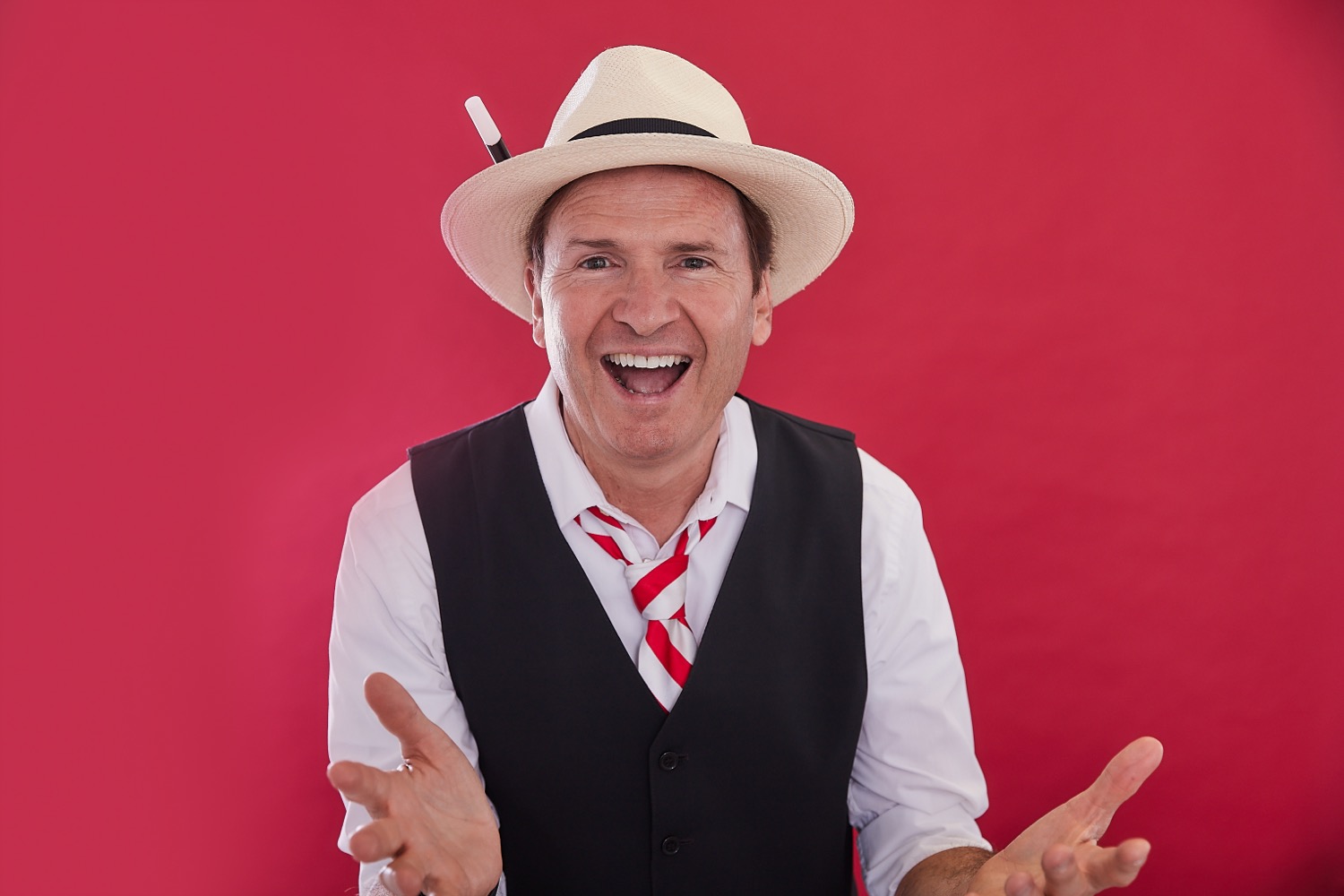
It also solves the "birthday child spotlight" problem directly. In an Amazing Dana show, the birthday child becomes part of the performance itself — the one moment of the party that's clearly built around them, in front of everyone. A handful of other guests get called up to participate too, and the whole audience joins in on a few tricks together, so it's not just the birthday child having fun while everyone else watches passively.
And unlike coordinating multiple stations, a magic show is turnkey for the parents hosting — Dana arrives early, brings everything needed, and runs the full show, so there's nothing to set up, staff, or manage during the party itself.
The Best of Both: Combining a Show with Stations
These aren't mutually exclusive. Many families use a magic show as the anchor of the party — the one moment everyone experiences together — and layer in a station or two (a craft table, a bounce house) for the more free-form stretches of time before or after the show. The show provides the shared, memorable centerpiece; the stations fill in the rest.
Related Reading
Want the full breakdown of what a show includes? See What's Included in a Show.
Looking for San Diego's top-rated option overall? See Who Is the Best Birthday Party Magician in San Diego?
See the main birthday party magic show page for full details and pricing.
Ready to Make the Magic Show the Centerpiece of Your Party?
Request a Children's Birthday Show to check availability, and Dana can help you figure out how to structure the party around the show, whether or not you're also adding stations on the side.

Comments